
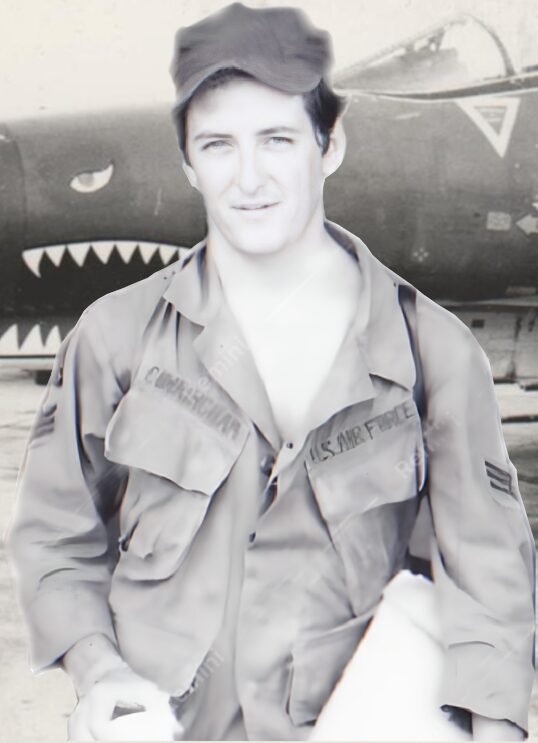
The unsung heroes of the F-4 Phantom’s legacy in the Vietnam War were the aircraft mechanics and crew chiefs on the ground. While pilots and weapon systems officers (WSOs) received the glory for shooting down MiGs, it was the ground crews who worked tirelessly, often under extreme conditions, to ensure the Phantoms were ready to fly and, just as importantly, to return home safely.
Here’s a look at their experiences and challenges:
Long Hours: Ground crews worked around the clock, often in shifts, to keep the aircraft flying. They knew that a delay in getting a jet ready for a mission could have life-or-death consequences for the aircrews.
Harsh Environment: They faced the punishing tropical heat and humidity of Southeast Asia, as well as frequent monsoon rains. The work was physically demanding and performed in the open, with little to no shelter from the elements.
Constant Threat: The air bases where they worked were not immune to attack. Mechanics and crew chiefs were constantly at risk from rocket and mortar attacks on the flight line. They had to perform their duties with an awareness of the ever-present danger.
The Crew Chief’s Role
The crew chief was the heart and soul of the maintenance team for a specific aircraft. They were responsible for the overall condition of their assigned F-4 and had a personal, almost familial, relationship with “their” jet.
Total Responsibility: A crew chief was in charge of every aspect of their Phantom’s maintenance, from pre-flight checks to post-flight inspections. They were the first to greet the aircraft when it returned from a mission and the last to send it off.
The “Phantom Phixers”: They had to be experts on a complex machine. The F-4 was a technological marvel for its time, with intricate systems for engines, hydraulics, electronics, and weapons. When an aircraft returned with battle damage—a common occurrence—the crew chief was responsible for organizing the team to repair it as quickly as possible.
A Personal Connection: Many crew chiefs formed a deep bond with their assigned aircraft. They knew its quirks and its history. This sense of ownership and personal pride was a powerful motivator, driving them to work through exhaustion to make sure their “bird” was in top condition.
The Challenge of Maintenance
The F-4 Phantom, while a rugged and powerful machine, was also complex and prone to issues.
Reliability Issues: Early models of the F-4 had numerous problems. Pilots often reported a jet as “up & up” if everything was working and “up & down” if the plane was okay but the avionics were not. The goal of an “up & up” call was a rare and celebrated event.
Complex Systems: The aircraft’s radar and other avionics were designed with vacuum tubes, which were notoriously unreliable and difficult to maintain in a hot, humid environment.
Battle Damage: The ground crews regularly had to repair aircraft that had been hit by enemy fire, from small arms to anti-aircraft guns. They became adept at patching up holes, fixing hydraulic leaks, and replacing damaged components to get the planes back in the air.
The contributions of these ground crews were absolutely essential to the U.S. air campaign in Vietnam. Their dedication, skill, and sheer grit under pressure allowed the F-4 Phantom to fly its thousands of combat sorties and become one of the most iconic aircraft of the war.