
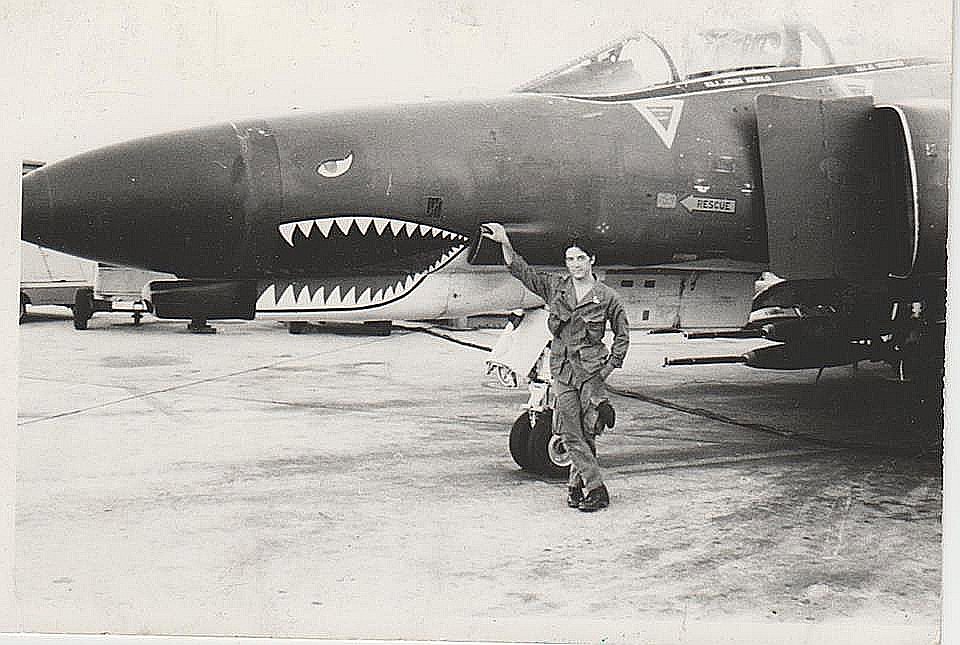
The F-4 was a twin-engine, two-seat supersonic jet designed as an interceptor for fleet defense. However, its robust airframe and impressive payload capacity quickly made it a versatile multi-role aircraft. During the Vietnam War, it was used for:
Air Superiority: Its primary role was to establish air dominance over the skies of North Vietnam, engaging North Vietnamese Air Force (NVAF) MiG fighters.
Ground Attack: The F-4 was an incredibly effective fighter-bomber. It could carry up to 18,650 pounds of ordnance, including a wide range of general-purpose bombs, cluster bombs, and guided missiles. This allowed it to perform close air support for ground troops and deep interdiction missions against targets in North Vietnam and Laos.
Reconnaissance: The RF-4C variant was a dedicated reconnaissance platform, equipped with cameras and other sensors to gather intelligence.
“Wild Weasel” Missions: Later in the war, the F-4G “Wild Weasel” variant was introduced. These aircraft were designed for the critical and dangerous task of suppressing enemy air defenses (SEAD), targeting and destroying surface-to-air missile (SAM) sites.
Air-to-Air Combat Challenges
Despite being a powerful and fast aircraft, the F-4 initially struggled in air-to-air combat against the smaller and nimbler MiG-17 and MiG-21 fighters used by the North Vietnamese. This was due to a combination of factors:
Doctrine and Technology: The F-4 was a product of the Cold War belief that future air combat would be fought with missiles at long range, and early variants lacked an internal cannon. When dogfights with MiGs became common, pilots found themselves at a disadvantage in close-quarters maneuvering. Early air-to-air missiles, like the AIM-7 Sparrow and AIM-4 Falcon, also proved to be less reliable than anticipated.
Pilot Training: The U.S. services had shifted their focus away from traditional dogfighting tactics. This led to a lackluster air-to-air kill ratio early in the war.
Evolution and Improvement
Recognizing these issues, the U.S. military made significant changes. The Navy, in particular, created the Navy Fighter Weapons School, famously known as “Top Gun.” This school revolutionized air combat training and dramatically improved the performance of Navy pilots. The Air Force, meanwhile, focused on technological upgrades and tactical changes.
These efforts paid off. The introduction of better-performing missiles and the adoption of a gun pod (and later an internal cannon on the F-4E variant) improved the Phantom’s dogfighting capabilities. The kill ratios improved significantly in the later stages of the war, particularly during the 1972 Linebacker campaigns.
By the end of the conflict, the F-4 Phantom II had become an iconic symbol of the war. It was a rugged, reliable, and adaptable machine that, despite its initial shortcomings, proved to be an indispensable asset for all branches of the military.